
Mixed-Use Railway
UKTram hosts this page as an industry platform to explain the concept of Mixed-Use Rail and to signpost further information and technical resources available across partner organisations. Mixed‑Use Railway (MUR) is a cross‑industry initiative for smarter, market‑led rail development - linking heavy rail, light rail, very light rail, metro, tram‑train and heritage.
What is Mixed-Use Railway?
Connecting rail modes. Delivering smarter, more flexible networks.
Mixed-Use Railway (MUR) is a cross-industry initiative promoting a more flexible, market-led approach to rail development.
It recognises that different rail modes can work together to meet varying levels of demand, supporting more connected and sustainable transport systems.


.png)


Matching the right solution to the right place
Rather than defaulting to a single approach, Mixed-Use Railway helps decision-makers select the most appropriate rail solution for each location.
This includes considering expected demand, capital and operating costs and long-term sustainability to ensure schemes are both viable and deliverable.
.jpg)

Designed for flexibility and growth
Improving connectivity between rail systems and other transport modes allows Mixed-Use Railway to support better passenger journeys and more integrated networks.
Systems can scale as demand grows, ensuring early design decisions do not limit future opportunities or expansion.
Recognised across the sector
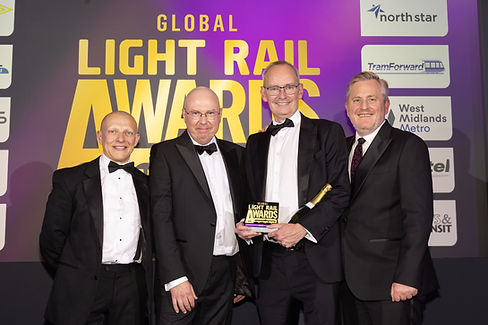
The Mixed-Use Railway initiative received the Team of the Year award at the Global Light Rail Awards in 2025. Submitted originally under the Vision of the Year category, this recognition highlights the sector’s strong collaboration in realising the concept. Developed through a partnership between heavy and light rail organisations, the initiative shows how shared expertise and cooperation can transform strategic vision into practical solutions.

Why Mixed-Use Railway?
Rail currently represents a relatively small proportion of overall transport journeys, with private transport accounting for the majority of trips.
Mixed-Use Railway aims to support sustainable growth in rail use by aligning rail solutions with real market demand and ensuring rail investments are commercially viable and deliverable.
When rail is the answer,
the type of rail matters.
Cost Efficiency
Network Flexibility
Intermodal Integration
Carbon Reduction
Reference cases and Operational applications
Using collective industry experience, the initiative has developed three reference cases that illustrate different ways rail modes can connect communities. They can operate within the national rail network or on its periphery, fully integrating with urban systems. These scenarios demonstrate how different rail modes can operate independently or share infrastructure depending on local requirements.
Across the three reference cases, the initiative has identified five potential operational applications demonstrating how Mixed-Use Railway approaches may be implemented. These applications illustrate different operational models across the rail spectrum.
Click the images to learn more.


5) Heritage rail in higher population areas remains an emerging concept and there is increasing interest in how these systems could contribute to local connectivity, particularly where they can link into existing transport networks and support onward journeys.
Matching mode to demand
The Mixed-Use Railway initiative brings together industry insight and analysis to support more informed decisions on rail investment and delivery.
Understanding how different rail modes align with levels of demand is central to this approach, helping ensure that systems are both commercially viable and operationally appropriate.

Selecting the most appropriate rail mode depends on more than forecast usage alone. Service frequency, network integration, operational characteristics and future scalability all play a role in determining the most suitable solution.
The Mixed-Use Railway community
The Mixed-Use Railway initiative is delivered collaboratively across the industry, with the initiative bringing together organisations across heavy rail and light rail, including regulators, safety bodies, operators, suppliers and authorities.

.png)


Further info/guidance


MUR enquiry form
The Mixed-Use Railway initiative is collaborative and cross-industry in nature. Enquiries may be directed to relevant organisations within the MUR community where appropriate.